Anyone looking for 1337x proxy access in 2026 knows the routine: the main site may drop out, mirrors get flagged, and the proxy lists that worked last month suddenly fail. You try a 1337x mirror, hit a redirect, then spend another hour hunting for a fresh 1337x unblock address, only to find half the links lead to blank pages or suspicious pop-ups. Getting past these blocks isn’t just about finding a new URL; it’s about picking a method that actually works and doesn’t leave you exposed.
But here's the catch, using random proxy lists or sketchy unblock sites can open you up to real risk. Some proxies log everything you do, inject their own ads, or break downloads halfway through. Others promise quick access but get banned as fast as you find them. If you’re not careful, you can end up with malware, leak your actual IP, or lose access altogether. The old advice to “just Google a proxy” barely works now, and relying on public lists is a gamble at best.
What matters more in 2026 is understanding how proxy access works for 1337x, what's actually happening when you use a proxy or mirror, which methods are stable, and where the real pitfalls lie. If you're after a reliable way to reach 1337x without getting burned, you need more than just a fresh link; you need to know which approaches keep you connected and which ones fail under pressure.
So, before you jump to the latest proxy list, here's how the landscape really works, and what to check first.
Why Is 1337x Blocked or Unreachable in 2026?
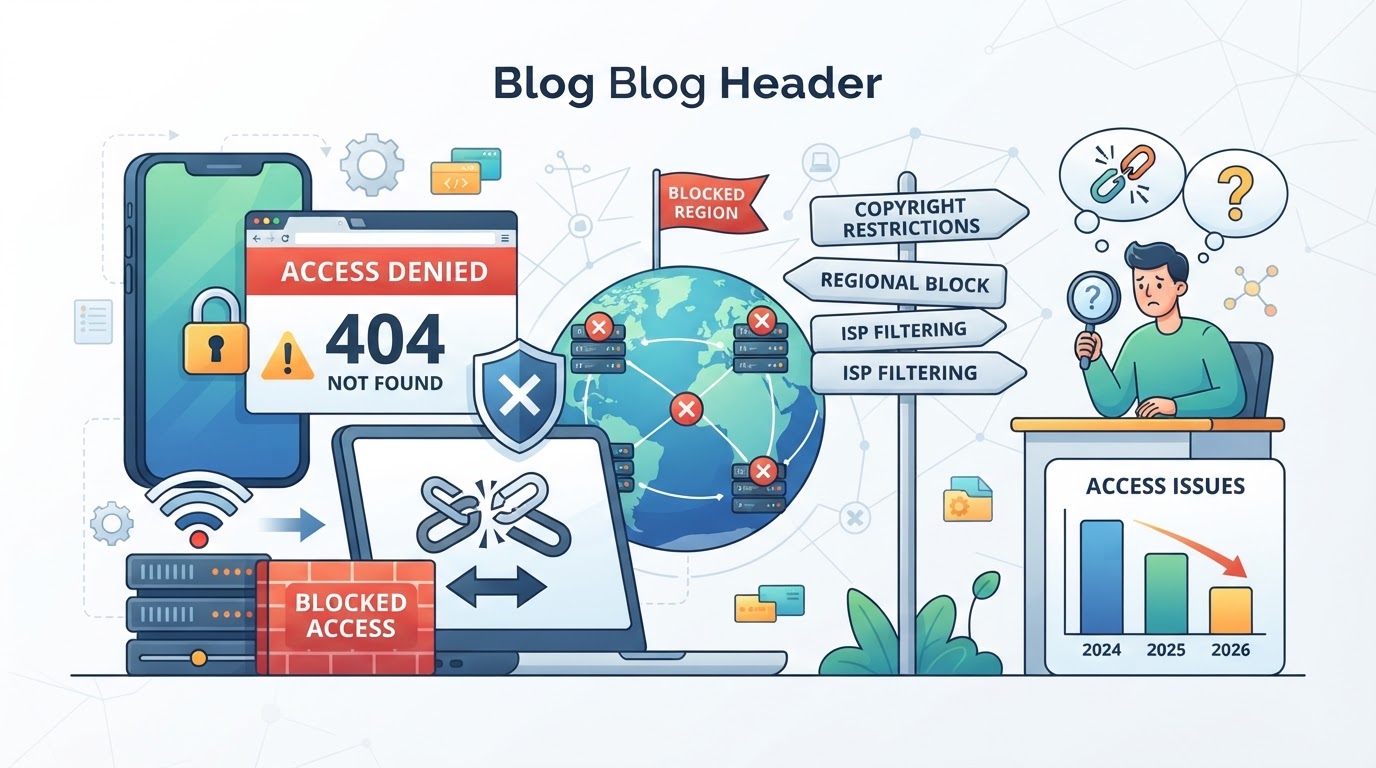
A blank page or connection error does not identify the cause. DNS resolution, routing, the site's availability, local policy, or a domain change may each be relevant. Check the actual message before attributing it to a government or ISP action.
Checking a Possible Network Restriction
Look for a network block notice and check the policy for that connection. A DNS lookup failure and an HTTP access-denied response are different observations. Neither proves the legal or administrative reason behind a restriction.
What a Domain Change Does and Does Not Establish
A different address might be a mirror, a relay, or an unrelated lookalike. Similar branding does not establish ownership. Do not infer an official migration, court order, or domain seizure without an attributable notice.
Why a Proxy or Mirror May Fail
- The endpoint or destination may be unavailable.
- A browser or application may not support the relay's behavior.
- A filtering policy or request limit may apply.
Record the actual failure rather than treating every dead link as proof of a blacklist.
What’s the Difference Between a 1337x Proxy, Mirror, and VPN?
Most people lump proxies, mirrors, and VPNs together when trying to reach 1337x, but they're not the same. Each method changes how your traffic gets to 1337x and what risks or limits you face. If you don’t know the difference, you can end up using a tool that either doesn’t work or actually makes things worse.
How a Proxy Site Works for 1337x
A web proxy fetches content through its own interface. It is different from configuring a proxy endpoint in another application. Its handling of scripts, links, and downloads affects which requests it actually relays.
| Method | What It Does | Boundary |
|---|---|---|
| Web proxy | Relays content through a web interface | Does not automatically configure other clients |
| Mirror | Serves a copy or alternate instance | Ownership and content integrity need separate checks |
| VPN tunnel | Routes traffic selected by its configuration | Does not verify a website or downloaded file |
What a Mirror Site Actually Is
A mirror is just a copy of 1337x, usually running on a different domain. It looks and feels like the real thing but may lag behind the main site, break suddenly, or hide malware in ads. Old mirrors are often abandoned or hijacked.
A mirror might work today and vanish tomorrow, a live mirror isn’t the same as a safe or reliable one.
Why a VPN Is Not the Same as a Proxy
A VPN tunnels traffic according to its route configuration. Split routes and application exceptions can change coverage. Tunnel encryption does not verify a mirror, grant access rights, or establish that files are safe. This is a comparison of routing scope, not a recommendation to replace one tool with another.
What Are the Main Risks of Using Free 1337x Proxies and Mirrors?
Free 1337x proxies and mirrors sound like a quick fix, but most carry real risks, downtime, malware, and privacy leaks can hit fast and hard. If you trust the wrong source, you may lose access or much worse.
Reliability Issues: Downtime and Inconsistent Access
Most free proxy sites and mirrors go offline without warning. When too many users flood the same server, it crashes or gets blacklisted. That means your access can drop at any time, leaving downloads unfinished or links dead.
Security Risks: Malware, Phishing, and Data Theft
Any public proxy site or mirror can inject malware, steal your credentials, or trick you into giving up sensitive info. A fake “1337x proxy” page might look right but hide drive-by downloads or phishing forms behind the scenes.
Using random proxies is playing with fire:
- You might get infected with ransomware or spyware that hijacks your device or steals your login info.
- Safer move: stick to sources you can vet, use sandboxed browsers, and never enter passwords or personal info on unknown mirrors.
Privacy Concerns: Who Sees Your Traffic?
Anyone running a free proxy or mirror can watch what you do, log every page you visit, or even intercept files you download. You have no control over their logging or what they do with your data, so your browsing can end up exposed to strangers.
The bottom line: free 1337x proxies and mirrors rarely deliver consistent access, and the privacy and security tradeoffs are serious. The next section covers how to find safer, more reliable ways to reach 1337x in 2026.
Where PuraRoute Fits in Managed Proxy Connections
For an authorized application that needs a configured proxy endpoint, PuraRoute provides connection credentials and resource-management options. This is separate from operating a mirror or validating a torrent. Do not assume that routing a webpage also routes a separate download client.
Managing Proxy Resources and Monitoring Usage
The console supports proxy credential generation, traffic monitoring, and static-resource status or renewal checks. Location and session options depend on the selected product and current availability. These controls describe the connection resource, not a guarantee of target-site access.
Rotating Residential Proxies: Large IP Pool and Location Targeting
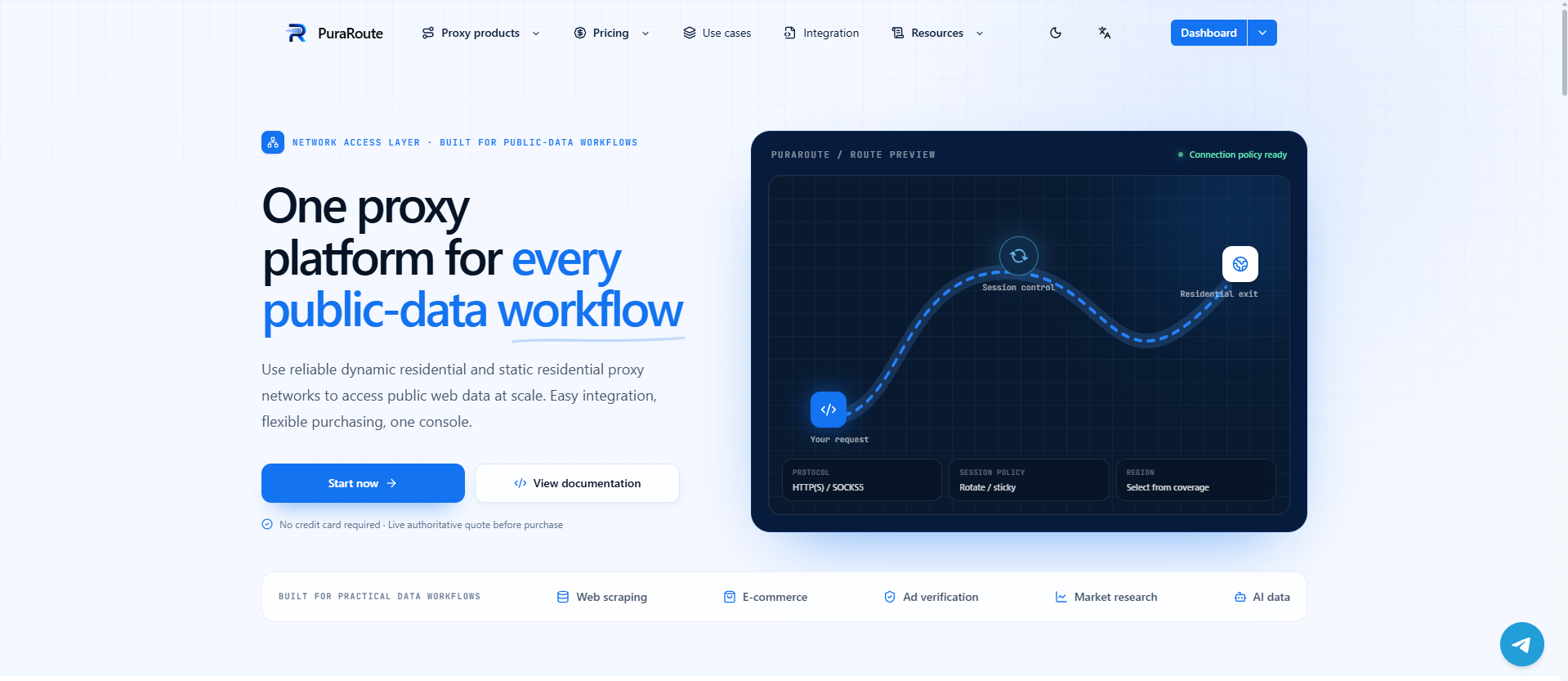
PuraRoute's rotating residential service offers location selection and configured rotation for authorized requests. Availability and behavior depend on the current pool and settings. Rotation does not remove a destination's request limits or resolve an account restriction.
Sticky Sessions and Fixed IPs: When You Need Session Consistency
Sticky sessions seek temporary exit-IP consistency under current settings and network conditions. Static residential or static native resources provide a fixed assigned IP while active. Check the actual application's proxy support: a website visit and a separate BitTorrent client are different traffic paths.
HTTP(S) and SOCKS5 Support: Compatibility with Browsers and Tools
Proxy integration shouldn’t be a guessing game. PuraRoute gives you standard Host, Port, Username, and Password for HTTP(S) or SOCKS5 protocols, so you can connect directly from any compatible browser, automation script, or antidetect tool. The key move is matching protocol to your software; if your script expects SOCKS5, don’t grab HTTP credentials and wonder why nothing works.
The next step is checking if your proxy or mirror actually works, before you trust it with real activity.
How to Check If a 1337x Proxy or Mirror Is Safe and Working
If you’re aiming for reliable 1337x access, don’t trust every proxy or mirror you find. Most failures happen because users skip basic safety checks, one wrong click and you’re dealing with malware, data theft, or a dead link. Here’s how to verify if a site is safe and actually works before you use it.
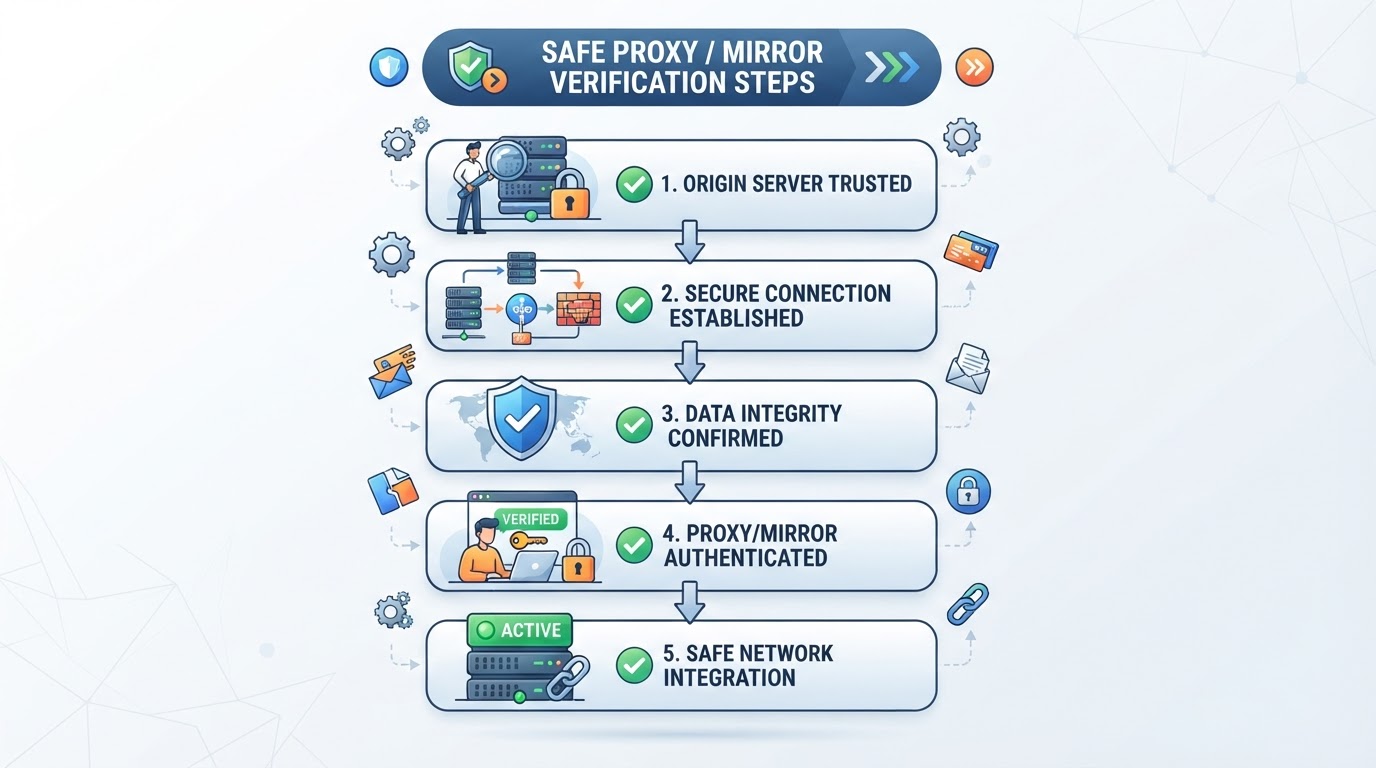
Steps to Verify a Proxy or Mirror
Checklist for fast validation:
- Check the exact domain and available ownership information; a valid TLS certificate only helps authenticate that domain's connection.
- Treat unexpected downloads, permission requests, and redirects as warning signs. Few ads do not prove legitimacy.
- Keep sensitive accounts out of untrusted pages. A guest window is not a malware sandbox.
- Reputation checks provide additional signals, not a guarantee that a site or file is safe.
Warning Signs of Unsafe or Fake Sites
Spot these red flags before you go further:
- Unexpected redirects, if you land somewhere off the expected site, bail out.
- Requests for logins or sensitive info, 1337x mirrors shouldn’t ask for accounts, passwords, or payment details.
- Mismatch between domain and expected content, if the branding, layout, or content is way off, it’s likely a fake.
How to Test Proxy Functionality Before Real Use
Don’t risk your main device or credentials, run these checks first:
- Check the exit route from the application being evaluated, not just an unrelated browser tab.
- Treat successful page loading as a page test only. It does not establish how a separate download client connects or whether a file is safe.
Only access material you are authorized to obtain; routing and content authorization are separate questions.
When a Rotating Proxy, Sticky Session, or Static IP Is the Right Choice
If you’re aiming for stable access to 1337x, picking the right proxy type matters more than the brand or price. The real question is whether your workflow needs fast IP changes, temporary consistency, or a fixed address for days at a time. Here’s how the main proxy types stack up for typical use cases.
When to Use a Rotating Residential Proxy
Rotation is useful when an authorized task explicitly requires changing exit IPs. It is not a substitute for request pacing or permission, and it can affect an IP-sensitive session.
| Requirement | Rotating | Sticky | Static |
|---|---|---|---|
| Changing exits | Configured rotation | Not the main goal | Not the main goal |
| Temporary IP continuity | Not guaranteed | Sought within current settings | Fixed assigned resource while active |
| Persistent assigned IP | No | No permanent reservation | Resource-term dependent |
| Location choice | Current pool options | Current pool options | Current inventory |
Choose using these requirements rather than claiming any mode is the safest way to avoid blocks.
When a Sticky Session Is Enough
Some workflows benefit from temporary IP continuity. Sticky behavior depends on the configuration and upstream conditions; it does not guarantee the entire transfer or application session will complete.
When a Static Residential or Native Resource Fits
Use a static resource when the application specifically needs a fixed assigned IP during the active resource term. Check protocol support, availability, and renewal conditions separately from performance or target-site acceptance.
Next, it’s worth knowing how to keep your proxy setup consistent, small mistakes can wipe out the best planning.
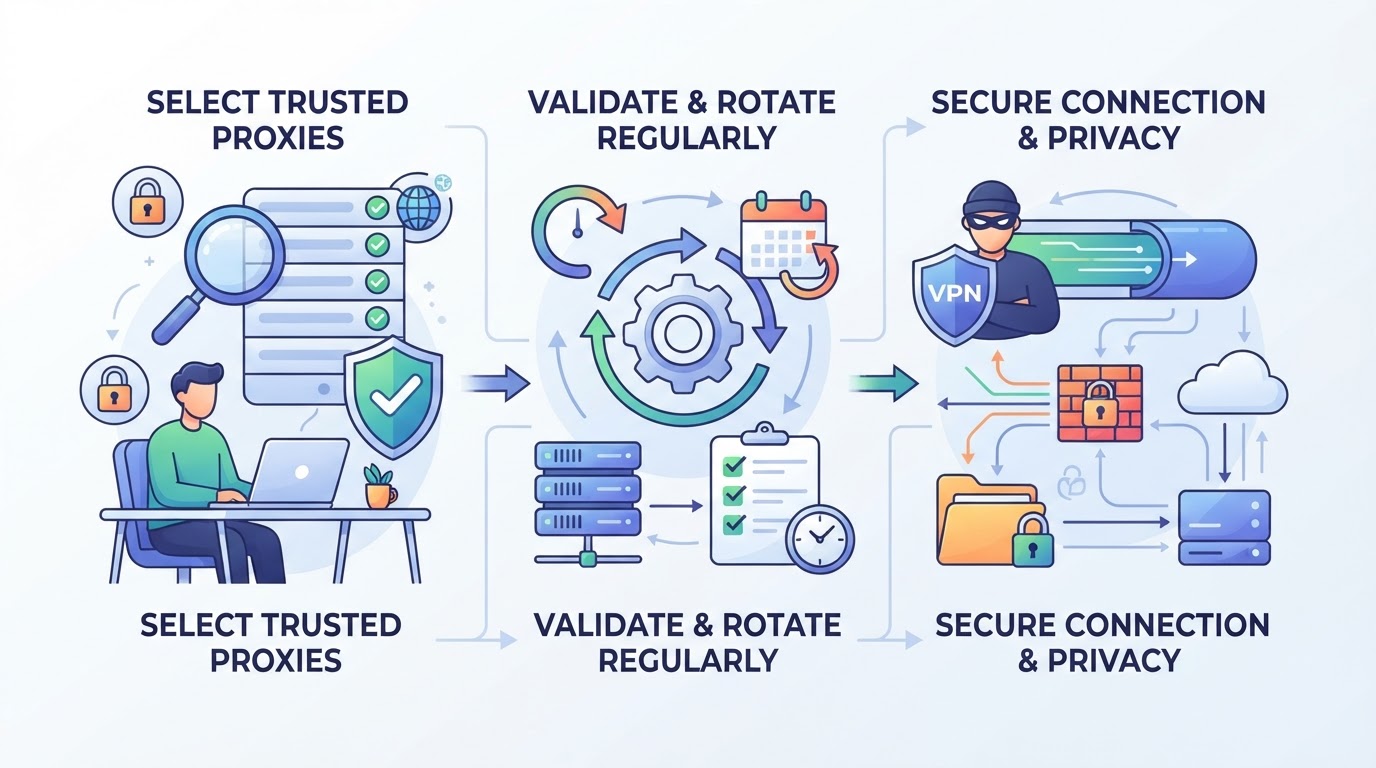
Best Practices for Safe and Consistent 1337x Proxy Use in 2026
Keep Your Browser and Tools Updated
Using outdated browsers or scripts is a common way malware gets through. Updates patch security holes and keep proxy compatibility stable, don’t skip them.
Avoid Entering Personal Information
- Never log in with real credentials on a proxy or mirror site.
- Don’t link accounts, emails, or payment details.
- If a proxy asks for extra info, close it and try another.
Verify Proxy Location and Protocol Support
Check that your proxy matches your tool’s protocol, HTTP(S) or SOCKS5. For region-specific tasks, confirm the proxy supports country or city targeting; mismatched settings block access.
Monitor for Connection Drops or IP Changes
If downloads stall or pages reload unexpectedly, your proxy may be unstable.
- Watch for session timeouts or IP flips mid-task.
- Reconnect if you lose access partway through.
- Switch proxies if reliability drops, sticking with a failing proxy risks data leaks.
Frequently Asked Questions About 1337x proxy
Can I use the same 1337x proxy credentials in both a browser and a script?
A web proxy page often provides only a destination-address interface. Reusable host, port, and authentication details belong to a configured endpoint service. The same endpoint can work in multiple clients only if each supports its protocol and authentication.
Does a sticky session guarantee the same IP for my entire 1337x session?
No, sticky sessions are designed to keep the same exit IP for a while, but they don’t guarantee it for your full 1337x session. The IP can change if the session window ends or network conditions shift. For full stability, you’d need a static IP, not a sticky session.
How do I check if a static residential or native proxy is available for my country?
To find out if a static residential or native proxy is available in your country, use the provider’s inventory tool or dashboard. These tools let you see current stock by country and city. Availability changes based on what’s in stock, so check before you buy.
Is it safer to use a paid proxy than a free 1337x proxy or mirror?
Price alone does not establish security. Evaluate the operator, TLS boundaries, ownership, and the client being configured. A paid endpoint does not verify third-party mirror content or files.
What should I do if all 1337x proxies and mirrors are blocked in my region?
Read any network or service notice and check permitted access with the relevant administrator or service. Repeatedly changing mirrors does not explain the failure or establish authorization. Use an authorized source for the material you need.
If your next step is to improve connection reliability or test different regions, the most direct move is to review your session and location requirements, then select a proxy approach that matches how long you need to keep the same IP and what kind of targeting you need. If you want to manage multiple types of connections or need flexible session control, you can start comparing available proxy services and see which configuration fits your workflow.
