
A Target bot can help monitor products or perform supported shopping actions, but different tools do different jobs. A restock service sends alerts. A browser extension works inside your browser. A desktop bot runs on your computer and usually needs more preparation and upkeep.
For a collector who wants a few card products, a useful alert may be enough. For someone following Target releases regularly, software such as Refract or Stellar may be worth comparing. Most Advanced Bot offers another approach through a Chrome extension. The choice should fit the products you want, your computer and the amount you can spend.
Product selection matters too. A shipping alert for a booster bundle is not the same as pickup availability for an Elite Trainer Box. Before comparing speed claims, make sure the tool watches the exact item and purchase option you need.
I would compare the published options, total running cost and the monitoring work you need before paying. I would also read the current vendor instructions for the specific Target module, rather than assume that an older setup still applies.
Which Target Shopping Bot Should You Compare?
Compare the operating model before the feature count
A Target shopping bot can mean a local desktop application, a browser extension or a service that sends alerts. Those choices change who runs the work and what you pay for. For a short personal watchlist, begin with notifications. If you want software that attempts shopping actions, compare the actual Target module and the machine it needs.
I checked the following information against public vendor material on November 2, 2026. The prices are displayed offers on that date, not resale valuations or claims about checkout performance.
| Option | What the provider describes | Cost or access basis | Who it suits |
|---|---|---|---|
| Refract | Windows/macOS application with a documented Target module | Homepage: $1,999 for the first three months, then $50/month | Someone intentionally maintaining a recurring multi-retailer setup |
| Stellar AIO | Desktop application with Target in its retailer guides; Windows and Mac documentation | Membership and renewal managed through Whop; inspect the actual available plan | Someone comparing several supported retailers in one application |
| Most Advanced Bot | Chrome-extension model, item keywords, fulfillment setting and shopping actions | Target page: $79.99; vendor describes one-time payment | Someone specifically looking for a browser-based tool and willing to assess its current compatibility |
| Hosted alerts | Provider runs the monitor; you receive a message and shop | The alert provider's own membership terms | Occasional purchases without maintaining a collector |
I would not pick a performance winner from the cheapest-looking row. A one-time extension purchase and a maintained desktop subscription buy different arrangements. I would compare whether I could run the required workflow at an acceptable cost; I did not conduct comparable live release tests.
The browser extension and desktop workflows differ in concrete ways
I checked Most Advanced Bot's product page for its Chrome setup, keyword inputs and pickup, shipping or delivery choices. That is a more specific reason to inspect it than the site's promotional speed claims. It also means your browser environment and selected shopping conditions are part of the setup.
Refract's documented Target workflow is a desktop module, not the same extension. Stellar is also installed software: I checked its computer requirements for Windows and Mac support, and found that the mobile companion requires the paired computer to remain running. A phone interface does not remove the desktop requirement.
For a buyer using a work laptop with installation restrictions, those are deciding differences. For someone who already maintains a compatible home machine, the continuing charges and Target-specific instructions may matter more. Resolve that choice before comparing advanced controls you may never use.
Do You Need a Target Restock Bot or Auto-Checkout?
Pick the tool for the part of shopping you are missing
If you keep learning about a product after it sells out, your first problem is information delivery. A hosted restock feed can address that without installing a purchasing application. If messages already arrive promptly but you cannot finish shopping, another feed does not address the later failure.
I separate the workflow into three parts: the item is observed, a useful message or action follows, and the retailer accepts an order. A tool can help with one part without controlling all three. That distinction is important when a seller calls both a notification service and checkout software a "restock bot."
| What happens now | What to investigate first | What would be unnecessary at this stage |
|---|---|---|
| You miss stock announcements | Exact-item coverage and notification delivery | A large local monitoring setup before checking alerts |
| Alerts describe the wrong pack or fulfillment | Item input, keywords and shipping/pickup selection | More checking frequency for the same wrong condition |
| The correct item opens, then sign-in fails | Current account/session instructions | Replacing a working alert service |
| The order stops at payment | The actual payment or profile message | Assuming a proxy subscription fixes the card |
I use that same distinction when deciding who needs proxies. A person receiving hosted alerts does not operate that service's collector. A desktop application you run can have a separate connection requirement. Buy resources for the component you actually control.
A retailer module is not just an install button
When I read Refract's current Target documentation, I found separate guides for setup, releases and its in-bot component. The older browser extension is specifically marked deprecated. An old video can show a real product and still teach a method that is no longer maintained.
The practical consequence is simple: identify the current supported path before importing someone else's setup. A successful installation only proves that the application opens. It does not establish that the product input, account session and selected fulfillment are ready for your intended item.
For an occasional collector, that maintenance can be more commitment than the purchase warrants. For a regular user, maintained retailer instructions are part of what the subscription buys. The difference is operating work, not merely a longer feature list.
What Should You Check Before Buying a License?
Calculate the commitment using the actual billing window
When I checked Refract's public homepage, it displayed $1,999 for the first three months, followed by $50/month. I would put the joining charge and later renewal in separate budget columns, rather than rely on an older forum quote.
For two intended purchases in the initial three-month period, that displayed entry charge alone would allocate $999.50 per intended purchase. This is arithmetic for judging a personal budget, not a forecast that two orders will complete. Proxy usage, any optional hosting and your time remain additional considerations. The same fixed charge can make a different decision for a regular operator with several supported stores.
I found the plan and renewal-management steps in Stellar's membership guide, which directs members to Whop. The extension vendor describes a one-time purchase. Do not divide those into a single apparent monthly price until the access period, included product and renewal terms are clear.
Availability and support can matter more than a ranking
Reading these buyer discussions, I kept seeing questions about access, older price quotes and support information behind memberships. I would check those buying constraints before following the loudest recommendation.
A tool on a waitlist is a different option from one available through its official purchase route today. A resale license introduces transfer rules. A rental introduces an access window that may end before you have learned the workflow. Put each of those terms beside the price rather than treating "available somewhere" as equivalent to a supported purchase.
Before paying, you should have four concrete answers: the current product you are buying, its access period, the machine you will run, and the route for updates and help. If one is unknown, leave it marked unknown. A screenshot of orders from another setup does not fill that gap.
How Does a Target Bot Know Which Product to Watch?
Use the identifier for the exact item
Target product URLs commonly contain an A-prefixed numeric identifier, or TCIN. The module's instructions determine whether it wants that identifier, a direct URL or another supported input. Copy the required form rather than assuming all input boxes accept the same thing.
The distinction becomes obvious with card products. A booster bundle, an Elite Trainer Box and another edition can share much of a title while being separate items. Keywords are convenient for discovery, but the intended product needs a more exact definition before an alert or action is useful.
Keep the price condition alongside that item. A monitor that finds a similarly named product above your intended spend has not found the same opportunity. An accepted task input is only the start; check that the normal product view matches what you meant to watch.
Shipping and pickup can produce different answers
Choose the fulfillment mode that matters to you. A shipping offer does not establish pickup availability at your local store, and pickup information for another store does not describe your own. Location is part of the product question, not a detail to add after a missed alert.
For example, if an alert refers to shipping and your task is pickup-only, increasing the number of checks will not correct the mismatch. Fix the watch condition. This is one reason buying more proxies can disappoint: the collector may be doing exactly what it was asked to do, for the wrong shopping requirement.
PuraRoute Proxies for Target Product Monitoring
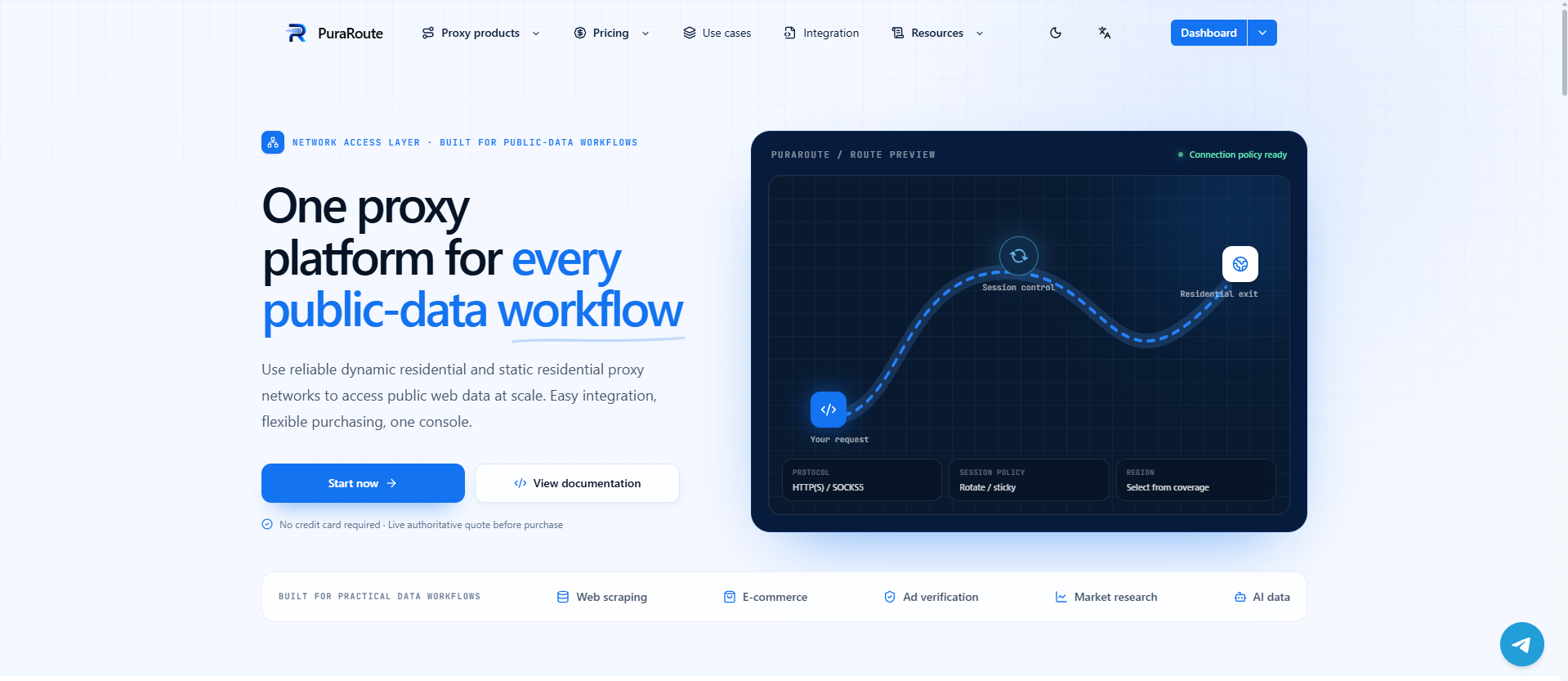
If your Target bot or product monitor needs paid proxies, PuraRoute is one service to consider. It offers dynamic residential proxies for repeated product checks, along with static residential proxies and static native proxies for longer use with an assigned IP. Choose according to the tool you run and the products you want to watch.
Choose around your Target shopping task
Dynamic residential proxies can support a watchlist that checks products repeatedly, while a static option can suit a tool that needs the same IP over time. Available location choices are useful for work aimed at a particular market. Keep your Target product and shipping or pickup choice clear as you compare options. That makes it easier to judge whether the proxy fits your actual monitoring needs.
Test a small watchlist before spending more
Use a few products you recognize and see whether your tool returns the correct item, price and availability information. Compare normal monitoring costs over a useful period, including times when nothing is in stock. If the setup meets your needs, expand the list gradually. This is a better buying decision than choosing a large proxy plan before you know what your Target work uses.
Why Can a Good Alert Still Lead to a Missed Order?
Inventory can change after the observation
The monitor sees the item, then sends a message. You or the shopping tool open it afterward. Stock can change between those steps, so a correct alert may lead to a page that is already sold out.
I would treat a fast alert as useful information, without assuming it reserves the item. If the live page now differs, compare item, variant and fulfillment before deciding the monitor was wrong. A product appearing available earlier does not mean the same offer remained available throughout checkout.
Try to identify the earliest point where the expected action stopped. If the alert was timely and the correct item opened, the problem is later in the process. Spending more on monitoring traffic is unlikely to address a payment or profile problem at that later stage.
Session, payment and later order status need different responses
A stale session calls for the tool's supported session-maintenance process. A visible payment rejection calls for checking that payment or profile. A later cancellation requires reading the retailer's stated reason and using its support route where appropriate.
Keep the support report short: module version, product input, approximate time and the first visible failure. Remove account cookies, payment details and proxy passwords. A relevant error is more helpful than sending every log from an entire release.
Retailer quantities, membership requirements and access rules still apply. Software features do not change eligibility. Evaluate the tool for the workflow it supports, rather than claims that it can create purchasing rights or ensure acceptance.
What Should Your First Target Watchlist Include?
Write down the product, purchase option and price limit
I would build the watchlist around exact items. For card products, a booster bundle, an Elite Trainer Box and another edition can share similar words while being different purchases. Copy the product identifier required by your tool and check that it opens the item you meant.
| Watchlist detail | What to record | Why it matters |
|---|---|---|
| Product | Exact item and the accepted identifier or URL | Similar titles can describe different boxes or packs |
| Edition or size | The version you actually want | A cheaper substitute may not suit your collection |
| Fulfillment | Shipping, pickup or delivery | Availability can differ between purchase options |
| Price limit | The amount you are willing to pay | A product match alone is not a good buying opportunity |
| Alert destination | A channel you will notice | A buried message can be as unhelpful as no alert |
For a personal list, keep it short enough to recognize each item. You can tell more quickly whether a message is wrong when you know the products. Expand once the original alerts are clear and useful, rather than collecting every loosely related keyword.
Check an ordinary result before a busy release
Use a familiar available product to check what the tool's normal output looks like. Does the link open the right item? Does it refer to the purchase option you chose? Do you understand which message means the item was seen and which means a later shopping step happened?
This is especially useful before a short rental or first subscription period. You do not want to spend the release trying to find a setting that could have been checked earlier. A normal result also gives support a better comparison if the same item later shows an error.
Keep your shopping budget separate from software and proxy costs. If the setup would be difficult to justify during a month with no wanted purchase, use a smaller commitment or a suitable alert service. Buy the amount of automation you can use and maintain for your own list.
Frequently Asked Questions About Target Bots
Does a hosted alert require my computer to stay on?
If the provider operates the collector on its own infrastructure, receiving its messages should not depend on running a local collector. Check that service's delivery method and conditions. A bot installed on your computer is a different arrangement, and its own running requirements apply.
Can I use one subscription for other retailers?
Check the vendor's current retailer list and what your specific plan includes. A general application can have several modules with different requirements or availability. Do not assume that buying the Target workflow automatically includes every retailer shown in promotional material or that all modules behave alike.
What should I do with a secondhand license offer?
Check whether the vendor permits transfer and how ownership is established before paying. Use its stated process and recognized purchase channels. A screenshot of a key or dashboard is not proof that the seller can transfer access, and a popular community account does not establish the license terms.
Is Walmart product input interchangeable with Target input?
No. Retailer modules can accept different identifiers and formats, even inside the same application. Follow each module's current field definition. A product link that works for one retailer is not a general template for another, and similar product titles do not create equivalent identifiers.
Should I install software from a direct message?
Obtain the application through the vendor's official distribution route and check its access requirements. Shopping software can interact with account sessions and information entered into forms. A direct message offering a faster or cheaper copy does not establish its source, integrity or entitlement to updates.
